


Local marketing helps businesses attract nearby customers by combining online and offline strategies. Optimizing your website for local search, managing your Google Business Profile, leveraging social media, building reviews, engaging with the community, and using targeted advertising ensures visibility, trust, and growth. Consistent tracking and refinement maximize results and ROI.
In today’s digital-first world, local businesses face both unprecedented opportunities and fierce competition. With a smartphone in nearly every pocket, customers turn to online searches, social media, and digital maps to discover nearby services and products. Consequently, establishing a robust local marketing presence has become essential for small and medium-sized enterprises looking to stand out in their community.
Understanding Local Marketing

Local marketing refers to the set of strategies that businesses use to promote their products or services within a specific geographic area. Unlike broad, national campaigns, local marketing zeroes in on the people most likely to become walk-in customers or call for an appointment. By tailoring messages, offers, and outreach to the nuances of your neighbourhood, you create relevance and trust. Moreover, search engines like Google prioritize local results when consumers use phrases such as “near me” or include a city name. Mastering local marketing means harmonizing online and offline tactics to ensure that your target audience not only finds you but also chooses you over competitors.
Optimizing Your Website for Local Search
Your website serves as the digital front door to your business. To capture local search traffic, begin by conducting keyword research focused on location-based terms (e.g., “plumber in Springfield” or “organic bakery downtown”). Incorporate these keywords naturally into your page titles, meta descriptions, header tags, and body content. Ensure your site features a dedicated “Contact Us” page with your business name, address, and phone number (NAP) formatted consistently throughout.
Implementing local schema markup helps search engines understand key business details, such as hours of operation, reviews, and service areas. Additionally, optimize for mobile by using a responsive design—over half of all local searches occur on smartphones. Fast load times, clear navigation, and click-to-call buttons can dramatically improve your conversion rate from search results to actual customers.
Claiming and Optimizing Your Google Business Profile
Google Business Profile (formerly Google My Business) is a powerful, free tool that can dramatically enhance your local visibility and attract more nearby customers. Begin by claiming and verifying your listing to ensure your business information is accurate and secure. Once claimed, complete every available field, including your business name, physical address, phone number, website URL, categories, and operating hours. High-quality photos of your storefront, products, team, or services can significantly increase trust and engagement from potential customers browsing your profile.
To maintain relevance and engagement, regularly post updates about your business, share promotions or special offers, and highlight upcoming events. Encourage happy customers to leave reviews, and make it a point to respond promptly and professionally to all feedback—both positive and negative. This proactive approach not only improves customer perception but also signals to search engines that your business is active and trustworthy. A fully optimized and well-maintained Google Business Profile can appear in the highly sought-after Local Pack—the map and top three listings—potentially capturing up to 44% of clicks from local search queries and driving meaningful foot traffic or inquiries to your business.
Harnessing Social Media for Local Reach
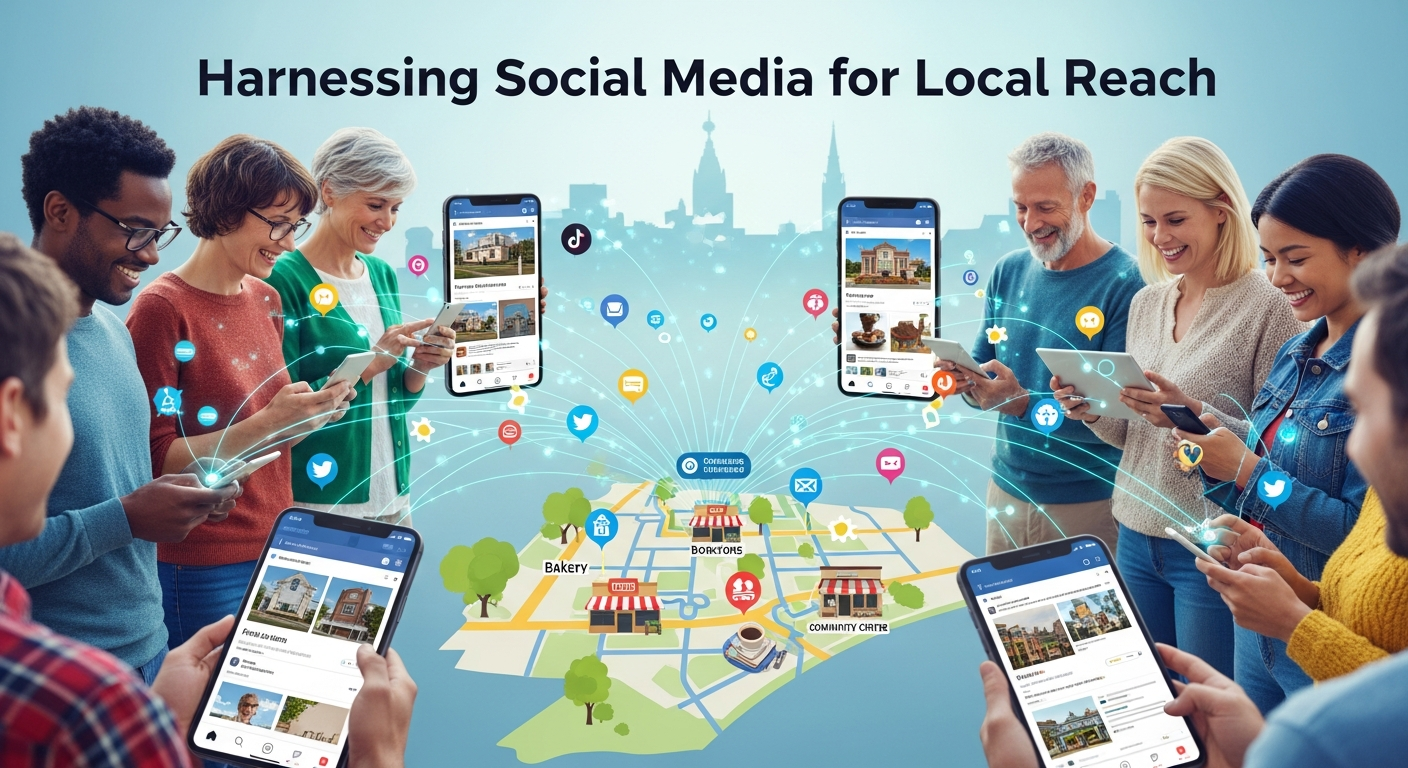
Social media platforms like Facebook, Instagram, and Nextdoor offer powerful targeting features that let you reach people within specific zip codes or radius distances. Develop a content calendar that highlights local stories—spotlight customer testimonials, behind-the-scenes looks at your team, or community events you sponsor. Geo-tag your posts and use location-specific hashtags (e.g., #BrooklynCafe, #DowntownDenver) to boost discoverability.
Paid social ads can complement organic efforts. Run promotions tailored to locals—“Show this ad for 10% off your first visit” or “Win free coffee by tagging a neighbor.” By focusing spend on audiences living or working nearby, you maximize ROI and cultivate loyal followers who can become brand ambassadors.
Building and Managing Online Reviews
Online reviews are the new word-of-mouth. Positive feedback on platforms like Google, Yelp, and Facebook can sway undecided consumers and boost your local rankings. Make it easy for customers to leave reviews by providing links in follow-up emails, receipts, or on table tents. Train your staff to remind satisfied patrons to share their experience online.
When you receive negative feedback, respond promptly and professionally. Offer to resolve issues offline and follow up when the matter is settled. This demonstrates to both the reviewer and prospective customers that you take service quality seriously. Over time, a strong review profile becomes a competitive moat that is difficult for new entrants to overcome.
Community Engagement and Local Partnerships
Building strong grassroots connections can translate into highly effective marketing opportunities for your business. Consider sponsoring a local charity run, hosting workshops at community centers, or collaborating with neighboring businesses for joint promotions. For instance, a hair salon could partner with a nearby boutique clothing store to offer a “Style & Shine” weekend discount, combining resources to attract a broader audience. These partnerships not only introduce your business to potential new customers but also cultivate goodwill and a positive reputation within the local community.
Actively participate in local events, fairs, and community gatherings. Set up a branded booth, distribute flyers, promotional materials, or discount coupons, and gather email addresses for follow-up marketing campaigns. Engaging directly with customers in person strengthens relationships, builds trust, and creates memorable experiences that are more likely to generate long-term loyalty and word-of-mouth referrals. By integrating community engagement and strategic partnerships into your marketing efforts, your business can expand its local reach while establishing itself as a trusted, active member of the neighborhood.
Leveraging Local Advertising and Promotions
In addition to organic marketing strategies, targeted advertising can significantly accelerate your results and help you reach potential customers more efficiently. One effective digital approach is using Google Ads with location extensions, which prominently display your business address and phone number directly in search ads. This makes it easier for nearby customers to find and contact you. You can also experiment with geo-fenced mobile ads, which trigger notifications or display promotions to users when they enter a predefined area around your store or service location, increasing the likelihood of immediate engagement.
Offline advertising methods continue to be highly effective for local businesses. Consider placing ads in local newspapers, community newsletters, or on neighborhood bulletin boards to reach residents who may not be actively searching online. Direct-mail campaigns can also yield results—sending postcards with exclusive discount codes or special offers encourages visits and purchases. Enhance these offline promotions with trackable URLs or QR codes so you can measure the effectiveness of each campaign, understand customer response, and optimize future marketing spend. By integrating both online and offline local advertising efforts, you maximize visibility, attract more foot traffic, and create measurable outcomes that support sustainable business growth.
Tracking Performance with Analytics

Data-driven decision-making is essential to ensure that your marketing budget is used efficiently and effectively. Start by setting up Google Analytics on your website and enabling location-specific reports to understand where your visitors are coming from, which areas generate the most engagement, and which campaigns are driving traffic. Utilize UTM parameters on social media posts, email campaigns, and other digital marketing initiatives to track not just traffic but also conversions, leads, and revenue attributed to each campaign. Additionally, keep a close eye on your Google Business Profile Insights to monitor search queries, map views, clicks to your website, phone calls, direction requests, and other user actions that indicate customer interest.
Regularly reviewing these metrics allows you to identify high-performing channels and tactics, enabling you to allocate more resources toward strategies that yield the best results. Conversely, underperforming campaigns should be paused, adjusted, or optimized to improve performance. By continually analyzing and iterating based on these insights, you ensure that your marketing strategy evolves with audience behavior and market trends. This iterative, data-informed approach supports continuous improvement, drives higher ROI, and fosters long-term sustainable growth for your business, ensuring that your marketing efforts are always aligned with measurable outcomes.
Conclusion and Next Steps
Local marketing is not a one-size-fits-all endeavor—it requires ongoing optimization, community engagement, and a willingness to adapt. By combining a well-optimized website, a robust Google Business Profile, social media outreach, review management, and targeted advertising, you position your business as the go-to choice in your area. Start by auditing your current efforts, prioritize the strategies that align with your goals, and allocate resources accordingly. With consistency and creativity, your local marketing efforts will translate into increased visibility, stronger customer relationships, and sustainable revenue growth. Ready to make your mark locally? Implement these tactics today and watch your business thrive.
Frequently Asked Questions (FAQ)
1. What is local marketing?
Local marketing targets customers within a specific geographic area using online and offline strategies to increase visibility and drive sales.
2. How can I optimize my website for local search?
Use location-based keywords, consistent NAP (Name, Address, Phone), local schema markup, mobile-friendly design, fast load times, and clear navigation.
3. Why is a Google Business Profile important?
It improves local search visibility, allows customers to find your business, showcases reviews, and can appear in the Local Pack on Google Maps.
4. How can social media help local marketing?
Social platforms allow geo-targeted posts, location-specific hashtags, and local promotions, helping businesses engage their community and attract nearby customers.
5. What role do online reviews play in local marketing?
Positive reviews enhance credibility, influence purchase decisions, and boost local search rankings. Responding professionally to feedback builds trust.
6. How do local partnerships and community engagement benefit my business?
Collaborating with local organizations, hosting events, or sponsoring activities increases exposure, builds relationships, and fosters goodwill in the community.
7. Which local advertising methods are most effective?
Geo-targeted digital ads, Google Ads with location extensions, and offline tactics like direct mail, local newspapers, and event promotions drive traffic and conversions.
8. How do I measure the success of local marketing efforts?
Track website traffic, conversions, Google Business Profile insights, social engagement, phone calls, and offline campaign responses using analytics tools and UTM parameters.
9. How often should I update my local marketing strategies?
Regularly audit your website, listings, reviews, and campaigns. Continuously refine based on performance metrics and changes in customer behavior or competition.
10. Can small businesses succeed with local marketing on a limited budget?
Yes. Focusing on high-impact, cost-effective strategies like optimized listings, social media engagement, review management, and community participation can yield significant results.


Leave a Reply